
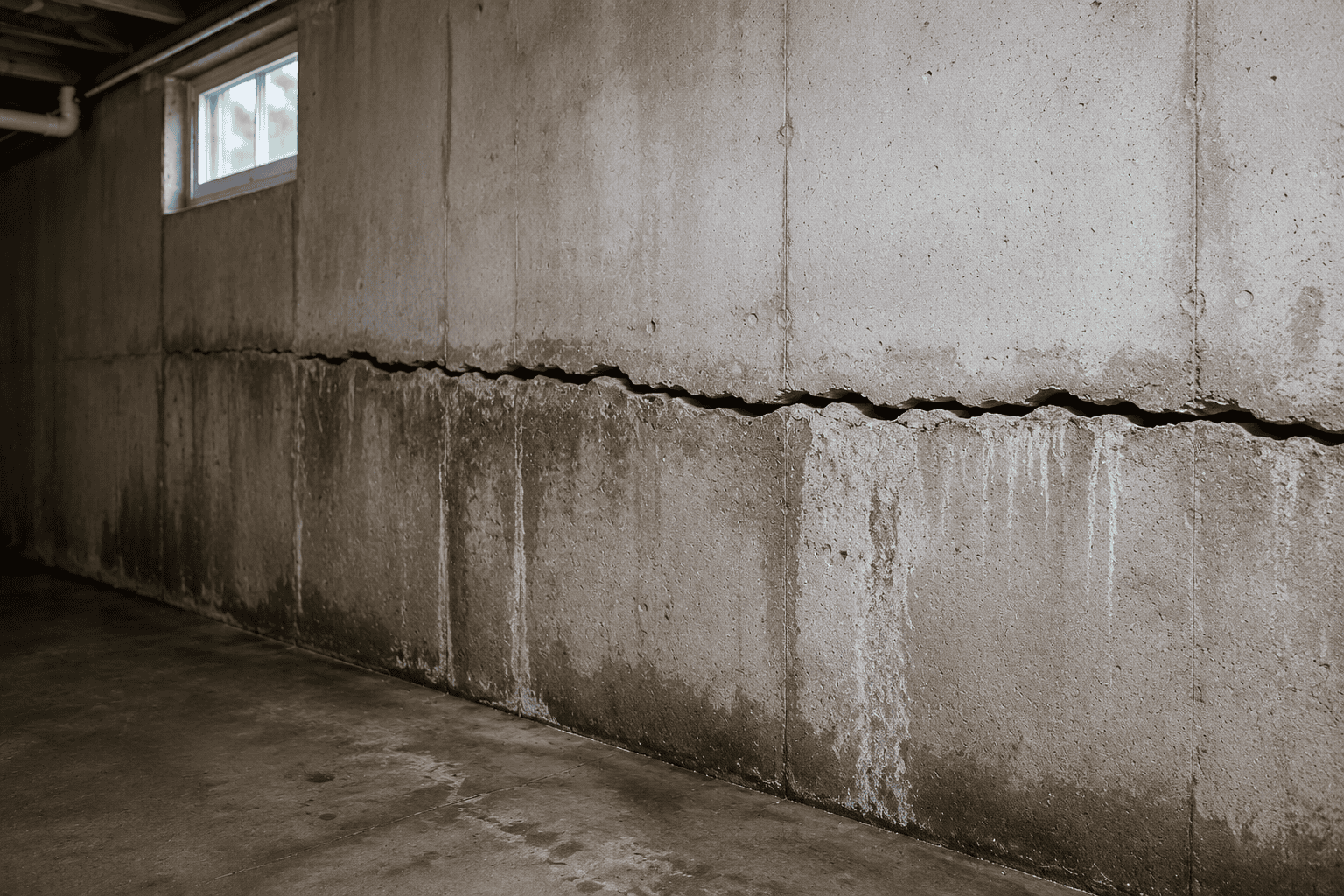
Horizontal cracks in a foundation wall can be concerning for any homeowner. While some small cracks may be cosmetic or related to normal settling, horizontal foundation cracks deserve careful attention because they can sometimes point to pressure against the wall, moisture problems, soil movement, or structural stress.
For New Jersey homeowners, foundation walls and basement areas deal with changing weather, heavy rain, freezing temperatures, clay soil movement, drainage issues, and seasonal moisture. Over time, these conditions can affect basement walls, masonry, concrete, and the foundation system of the home.
If you see a horizontal crack across a basement wall, foundation wall, block wall, or exterior masonry area, it is important not to ignore it. The crack may not always mean immediate danger, but it should be inspected so the cause can be understood before the damage gets worse.
Homecraft Home Improvements LLC helps homeowners across Central New Jersey with foundation repair and underpinning services, basement finishing and renovation services, and masonry services. If you are unsure whether a crack is minor or serious, a proper inspection is the best first step.
What Is a Horizontal Foundation Crack?
A horizontal foundation crack is a crack that runs side to side across a foundation or basement wall. It may appear in concrete, block, brick, or masonry foundation walls. Sometimes the crack is thin and straight. Other times it may be wider, uneven, or accompanied by bowing, bulging, water stains, or wall movement.
Horizontal cracks may appear:
- Along basement walls
- Across concrete foundation walls
- Through block foundation walls
- Near the middle of a wall
- Close to exterior grading
- Around areas with moisture or water pressure
- Near retaining walls or masonry structures
Horizontal cracks should be taken seriously because they may be caused by pressure pushing against the foundation wall from outside the home.
Why Horizontal Cracks Can Be a Warning Sign
Not every foundation crack has the same meaning. Vertical cracks, diagonal cracks, stair-step cracks, and horizontal cracks can all have different causes. Horizontal cracks are often more concerning because they can be related to lateral pressure.
Lateral pressure means force pushing against the wall from the outside. This can happen when soil becomes saturated with water, expands during freeze-thaw cycles, or presses against the foundation over time.
Possible causes of horizontal foundation cracks include:
- Hydrostatic pressure from water in the soil
- Poor drainage around the home
- Expansive soil movement
- Freeze-thaw cycles
- Bowing basement walls
- Foundation wall movement
- Poor grading near the foundation
- Clogged or damaged gutters
- Aging foundation materials
- Structural pressure
- Previous repairs that failed
If the wall is bowing inward, leaning, or cracking in multiple places, the issue may require professional repair.
Horizontal Cracks vs Vertical Cracks
Homeowners often ask whether horizontal cracks are worse than vertical cracks. The answer depends on the cause, size, location, and whether the crack is moving or allowing water inside.
Vertical Cracks
Vertical cracks may be caused by normal settlement, shrinkage, or minor movement. Some vertical cracks are not serious, especially if they are narrow and not leaking.
Horizontal Cracks
Horizontal cracks can be more concerning because they may suggest pressure against the wall. If the wall is also bowing or bulging, it should be inspected quickly.
Stair-Step Cracks
Stair-step cracks often follow mortar joints in block or brick walls. These may indicate settlement, soil movement, or foundation stress. Stair-step cracks can also connect to masonry repair concerns.
The safest approach is to have the crack inspected instead of guessing from appearance alone.
Signs a Horizontal Foundation Crack May Be Serious
A horizontal crack becomes more concerning when it appears with other warning signs. These signs may point to movement, water pressure, or structural stress.
Look for:
- Bowing basement walls
- Bulging foundation walls
- Water leaking through the crack
- White powdery residue on the wall
- Cracks that are widening
- Multiple cracks in the same wall
- Doors or windows sticking
- Uneven floors
- Gaps around window or door frames
- Cracks in brick or exterior masonry
- Damp basement smell
- Paint or coating peeling from the wall
- Wall movement after heavy rain
If you notice more than one of these problems, contact a contractor for an inspection.
How Basement Water Problems Connect to Foundation Cracks
Foundation cracks and basement moisture often go together. When water builds up in the soil around the home, it can increase pressure against the foundation wall. If there are cracks, weak joints, or gaps, water may begin to enter the basement.
Common water-related signs include:
- Damp basement walls
- Water stains
- Musty odours
- Peeling paint
- Efflorescence
- Wet flooring
- Moisture near wall-floor joints
- Water after heavy rain
- Mould-like growth
- Soft or damaged drywall in finished basements
Before finishing a basement, it is important to address foundation cracks, water entry, and drainage concerns. If your basement already has moisture problems, learn more about Homecraft’s basement finishing and renovation services.
How Masonry Damage May Be Related
Foundation movement can sometimes show up in masonry. Cracked brick, damaged mortar joints, leaning steps, gaps near stoops, or stair-step cracks in exterior walls may be signs that the issue is not limited to one area.
Masonry problems that may connect to foundation concerns include:
- Stair-step cracks in brickwork
- Cracked retaining walls
- Loose or shifting steps
- Crumbling mortar
- Brick walls pulling away
- Foundation-adjacent masonry cracks
- Stonework movement
- Gaps around exterior walls
If you see both foundation cracks and masonry damage, the full area should be inspected. Homecraft provides masonry services for brick, stone, steps, stoops, retaining walls, and related exterior repair needs.
Should You Repair a Horizontal Foundation Crack Yourself?
Small cosmetic repairs may seem simple, but horizontal foundation cracks should not be covered up without understanding the cause. Filling a crack may temporarily hide the problem, but it does not fix pressure against the wall, water buildup, poor drainage, or structural movement.
DIY crack filler may not be enough if:
- The wall is bowing
- Water is entering
- The crack is growing
- The foundation wall has shifted
- The basement has moisture problems
- The crack returns after repair
- The crack runs across a large section
- Exterior drainage is poor
A proper inspection helps determine whether the issue is a simple crack repair, a waterproofing concern, a masonry repair, or a deeper structural problem.
What a Contractor Should Check
A foundation inspection should look beyond the visible crack. The goal is to understand why the crack happened and whether the wall is still stable.
A contractor may check:
- Crack direction and width
- Whether the crack is active or old
- Wall bowing or movement
- Moisture around the crack
- Soil and grading near the home
- Downspout discharge
- Gutter condition
- Basement humidity
- Interior wall condition
- Exterior masonry damage
- Foundation material
- Drainage patterns
- Signs of settlement
For serious structural concerns, an engineer or specialist may be needed before repair work begins. A trustworthy contractor should explain when additional evaluation is appropriate.
Common Repair Options
The right repair depends on the cause and severity of the crack. Not every home needs the same solution.
Possible repair approaches may include:
- Crack repair
- Foundation wall reinforcement
- Basement waterproofing
- Drainage correction
- Grading improvements
- Masonry repair
- Wall stabilization
- Foundation underpinning
- Repair of damaged basement finishes
- Gutter and downspout improvements
The important thing is to match the repair to the actual cause. For example, if water pressure caused the crack, simply patching the wall without addressing water may not solve the problem long term.
Why Early Repair Matters
Foundation problems usually do not improve on their own. A small crack may remain stable for years, but if the underlying cause continues, the damage can spread.
Delaying repair may lead to:
- Wider cracks
- Water entry
- Basement damage
- Bowing walls
- Masonry movement
- Damaged finished basement areas
- Higher repair costs
- Reduced home value
- Safety concerns
Early inspection gives homeowners more options and helps prevent small issues from becoming major structural repairs.
When to Call Homecraft Home Improvements LLC
You should schedule an inspection if you notice horizontal cracks, bowing walls, water entry, stair-step cracks, foundation movement, basement moisture, or masonry damage around your home.
Homecraft Home Improvements LLC provides:
- Foundation repair and underpinning services
- Basement finishing and renovation services
- Masonry services
- Bathroom renovation services
- Kitchen renovation services
You can also view recent renovation projects or check the areas we cover to learn more about service availability across Central New Jersey.
Areas We Serve in Central New Jersey
Homecraft Home Improvements LLC serves homeowners across Central New Jersey, including:
- Edison NJ
- Bridgewater NJ
- Hazlet NJ
- Keansburg NJ
- Middletown NJ
- Bernardsville NJ
- Chester NJ
- Clinton NJ
- Long Valley NJ
- Martinsville NJ
- Middlesex NJ
- Surrounding New Jersey communities
If you are searching for foundation repair contractors, basement waterproofing help, or masonry repair in Central New Jersey, Homecraft can help you take the next step.
Schedule a Foundation Inspection in New Jersey
Horizontal foundation cracks should not be ignored. They may be related to water pressure, soil movement, bowing basement walls, masonry damage, or structural stress. The sooner the crack is inspected, the easier it is to understand the cause and plan the right repair.
Contact Homecraft Home Improvements LLC today to request a free estimate for foundation, basement, or masonry repair services in Central New Jersey.


